Best ETFs for Long-Term Growth
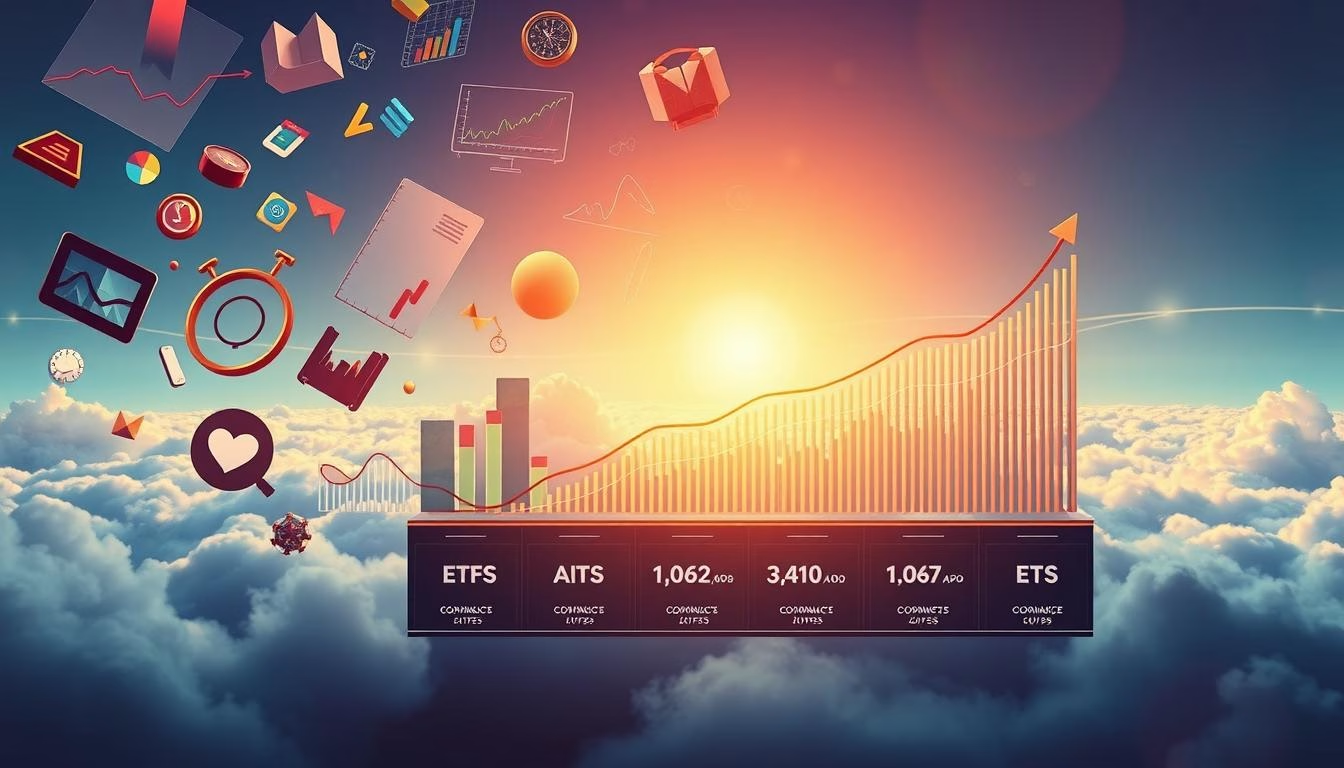
Are investors missing out on a key tool for building wealth? Exchange-Traded Funds (ETFs) are becoming more popular in finance. But, how can they help with long-term growth?
This section looks at the best ETFs for lasting success in investing. We’ll use Morningstar’s research to guide us. It’s all about finding the right ETFs for a strong portfolio over time. Knowing which ETFs to choose is crucial for a better financial future.
Understanding ETFs: What They Are and How They Work
Exchange-Traded Funds, or ETFs, are a special kind of investment that trades like stocks. They hold a mix of assets like stocks, bonds, and commodities. This makes them a flexible choice for investors.
ETFs are known for their liquidity. This means you can buy and sell shares all day at market prices. This is different from mutual funds, which trade at a single price at the end of the day.
ETFs also offer transparency. They regularly share their holdings. This helps investors make informed choices based on ETF reviews.
ETFs have some big advantages over mutual funds. They usually have lower expense ratios, which means more of your money stays with you. They also tend to be more tax-efficient. Knowing these basics is key for finding the best ETFs.
Key Factors to Consider When Selecting ETFs
When picking the best ETFs, investors need to look at a few key things. The expense ratio is one of them. It affects how much you keep after fees over time. Choosing ETFs with lower expense ratios can help your money grow more in the long run.
Looking at a fund’s past performance is also crucial. It shows if the ETF is reliable and consistent. It’s important to check how the fund did in different market times. This helps understand its long-term potential.
The size and liquidity of a fund matter too. A bigger fund often means more investor trust and stability. Liquidity makes it easier to buy and sell without big price swings. Financial advisors stress these points to guide clients in making good choices.
Top ETFs for Long-Term Growth in 2023
Investors aiming to boost their portfolios in 2023 have many great ETF options. Growth ETFs are especially attractive for their potential to offer big returns. The Invesco QQQ Trust is a top pick, focusing on tech stocks and showing strong resilience.
The iShares Russell 1000 Growth ETF is also noteworthy. It invests in large U.S. companies with a history of growth.
For those interested in value, the Vanguard Value ETF is a good choice. It offers a mix of undervalued stocks ready for a comeback. The Schwab U.S. Large-Cap Value ETF is another solid option, balancing safety and performance.
Dividend growth ETFs are key for long-term plans. The Vanguard Dividend Appreciation ETF focuses on companies that increase their dividends each year. The iShares Select Dividend ETF is also highly regarded, focusing on mid and small-cap companies with strong dividend yields.
Experts like Bloomberg agree these are top picks for 2023. These ETFs offer a mix of growth, value, and income, helping investors tackle the changing financial world.
Sector-Specific ETFs to Consider
Investors looking for specific growth opportunities often choose sector-specific ETFs. These focus on three key areas: technology, healthcare, and renewable energy. Each sector has its own strengths, shaped by market trends and innovation.
In technology, companies are always improving, thanks to AI and cloud computing. The Technology Select Sector SPDR Fund (XLC) gives you a peek into the tech world. It includes both big names and new players, promising strong growth.
Healthcare is another exciting sector, with big leaps in biotech and telehealth. The Health Care Select Sector SPDR Fund (XLV) lets you invest in a wide range of healthcare fields. With more people needing healthcare, this sector looks promising.
Renewable energy is also on the rise, driven by a global push for sustainability. The iShares Global Clean Energy ETF (ICLN) connects you to the clean energy market. With big investments in renewables, this sector has a lot of potential.
Doing your homework on ETFs is key before investing in these sectors. Knowing the trends and future of tech, healthcare, and renewable energy helps you make smart choices. This way, you can match your investments with the market’s direction.
The Importance of Diversification in ETF Investing
Diversification is key in ETF investing. It helps keep returns stable and risks low. By investing in different sectors, regions, and asset classes, you make your portfolio stronger against market ups and downs. Studies show that diversified portfolios usually do better over time.
Good diversification strategies can protect your portfolio from market swings. For example, if one sector falls, another can help balance it out. This way, you can avoid big losses. Experts suggest mixing equities, bonds, and other assets to boost stability and growth.
Many see ETF bundles as a smart choice because they offer diversification right off the bat. These products make it easy to spread risk and tap into various industries and markets. With the right approach to ETF investing and diversification, you can handle the financial world’s challenges better.
Comparing Actively Managed ETFs vs. Index ETFs
When looking at investment options, it’s key to compare actively managed ETFs and index ETFs. Actively managed ETFs have a team of managers who pick stocks to try and beat the market. They aim for higher returns but often charge more because of their active management.
On the other hand, index ETFs follow a specific market index. This means investors get market returns without the high costs. It’s great for those who like a simple, low-cost investment approach.
The performance of these ETFs can differ a lot. Actively managed ETFs might do better in shaky markets, but index ETFs tend to be more steady over time. It’s important for investors to think about their goals and how much risk they can handle before choosing.
Keeping an Eye on Economic Indicators
In ETF investing, knowing about economic indicators is key. Things like interest rates, inflation, GDP growth, and job numbers shape the market. For example, higher interest rates can make borrowing harder, affecting stock prices and ETF returns.
Watching inflation is also important. High inflation can cut down on how much money people can buy things with. This can hurt corporate profits. Investors should keep an eye on these changes, as they affect how different sectors do.
GDP growth shows how well the economy is doing. When GDP grows, people feel more confident and want to invest. But if it doesn’t grow, investors might get worried. Knowing this helps investors make smart choices in ETFs, based on what the economy might do next.
Job numbers tell us about the economy’s health. A strong job market means people have more money to spend. This can help ETF investors plan better, considering how jobs impact their investments. For more on how ETF investing changes with these economic signs, check out resources that dive into current trends and.
Tips for Successful ETF Investment Strategies
Starting with clear goals is key to ETF investing success. Investors should know their time frame, risk level, and income needs. This helps pick the right ETFs for their goals.
Regularly checking your portfolio is also important. It lets you see if your ETFs are doing well. If not, you might need to change your investments.
Being flexible is crucial in this fast-changing world. Investors should adjust their investments based on new trends and promising sectors. This way, they can make the most of their ETFs and grow their wealth over time.
Automating your investments can also help. It keeps your savings consistent and avoids emotional decisions. This makes saving easier and more reliable.
Reinvesting dividends is another smart move. It lets you buy more shares, which can grow your wealth faster. Following these tips can lead to better ETF investing and help you reach your financial goals.


0 Comments